


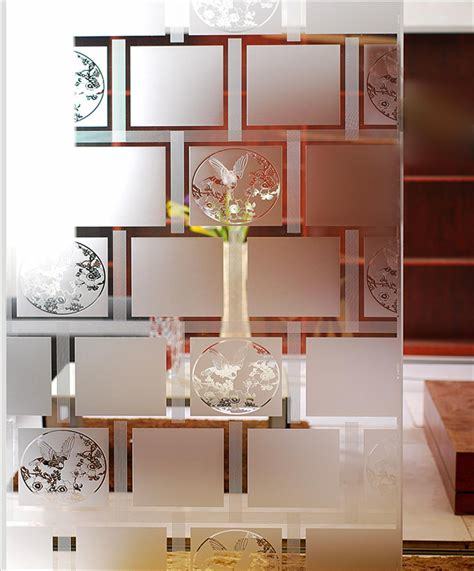
Etched glass is a process that uses acidic substances to treat the glass surface, commonly employed in the production of decorative items, glassware, and works of art. The basic procedure includes: selecting high-quality glass, applying a protective film, cleaning, pre‑treatment, frosting, polishing, removing the film, cutting, rinsing, quality inspection, and packaging. Specifically, a layer of paraffin wax is applied to the glass as a protective coating; after the wax has cured, patterns are etched into it, and then hydrofluoric acid is used to corrode the glass, thereby creating the desired design.

Oil‑sand glass is a specially treated type of glass with a frosted surface that allows light to pass through while remaining opaque, subtly blurring the view behind it and creating a hazy, ethereal aesthetic. It is commonly used in bathrooms, partition walls, and office desk tops. Additionally, oil‑sand glass finds applications in upscale entertainment venues such as hotels, bars, karaoke lounges, and cafés.

Bent tempered glass is widely used in architecture, automobiles, ships, aircraft, instruments, meters, and furniture, among other fields.

The primary function of smart dimming glass is to provide privacy protection, allowing users to adjust its transparency at will.


Customization: can be customized by the customer's favorite stripes, line patterns and other patterns.

Jade glass is a specialized decorative glass produced through high‑temperature melting and unique firing processes. By replicating the warm, lustrous texture, semi‑translucent sheen, and internal veining of natural jade, it achieves an appearance reminiscent of jade while surpassing the performance of natural stone. It is a cutting‑edge material for high‑end architecture and interior design.





Fill in your requirements
China Guangdong Haibo Special Glass Technology Co., Ltd. Unified Social Credit Code: 91440101MA5AT33G12 Contact Numbers: General Manager Cao, 13178822749; General Manager Wei, 13533794186.