

Home
Product
Architectural Glass
Home Glass
Safety Glass
Art Glass
Solution
Real Estate
Market
Park
Troops
Villa
Industry
Case
News
Company News
Industry Knowledge
About HB
Company Profile
Processing Base
Honor
Cooperation
Contact Us
Frequently Asked Questions
08
2024-07
What is the difference between bulletproof glass and laminated glass?
Bulletproof glass and laminated glass have significant differences in structure and function. First of all, bulletproof glass is a special kind of laminated glass, which is similar in structure to ordinary laminated glass, but there are strict requirements on material selection.
06
How to avoid self-explosion of tempered glass
To avoid self-explosion of tempered glass, it can be considered and operated from the following aspects:
Stair tread anti-skid glass maintenance method
The maintenance method of stair tread anti-skid glass is very important to maintain its anti-skid performance, prolong its service life and ensure the safety of use. The following are some recommended maintenance methods, dotted and summarized in a clear format:
05
Where is jade glass suitable?
Because jade glass has extremely high corrosion resistance, high temperature resistance and zero water absorption, it is also very suitable for kitchen countertops and other places that require frequent contact with water and heat sources. In these scenarios, jade glass can maintain a long-term warm color, clean as new, and easy to clean, will not produce mildew, yellowing, discoloration and other problems.
Why does glass need to be inverted safety angle?
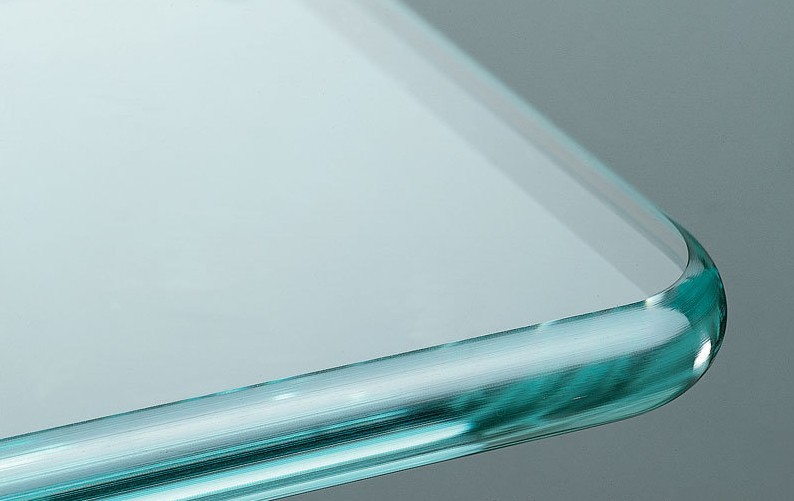
In summary, the chamfering of glass is mainly for safety, aesthetics and functionality. Through the chamfering treatment, the sharp parts and micro-cracks of the glass edge can be removed, and the safety and aesthetics of the glass can be improved; at the same time, the chamfering treatment can also make the glass easier to assemble and use. These advantages make chamfering an indispensable process in glass processing.
04
What coated glass is commonly used in office buildings
Referred to as Low-E glass, it has a very low surface emissivity, usually less than 0.25. The reflectivity of far infrared thermal radiation is very high, and more than 80% of the far infrared thermal radiation can be reflected back.