
Foshan tempered glass factory, why tempered glass needs to be hot-dipped?
Release time:
Sep 03,2024
We are a tempered glass factory in Guangdong, which can provide you with cost-effective tempered glass prices. We also have excellent tempered glass processing technology and experienced tempered glass installation methods. Tempered glass application effects are industry standards.

The main reason why glass, especially tempered glass, is hot-dipped (also known as homogenization or "detonation") is to significantly reduce its self-detonation rate. The following is a detailed explanation of this process:
Purpose of hot dip treatment

Reduce the self-explosion rate:
Tempered glass in the manufacturing and use process, due to internal stress distribution or impurities (such as nickel sulfide), may lead to self-explosion phenomenon. The hot dip treatment makes the stress inside the glass tend to be balanced through the heating and heat preservation process, and promotes the impurities such as nickel sulfide to quickly complete the crystal phase transformation in the glass.
In this way, the tempered glass that may have exploded in use will be broken in advance in the hot dip furnace of the factory, thereby reducing the risk of self-explosion in use after installation.

Increased security:
Self-explosion will not only affect the appearance and use of the building, but also may cause personal injury and property damage. Through the hot dip treatment, the self-explosion rate of tempered glass can be significantly reduced, and the safety and reliability of the building can be improved.
The process of hot dip treatment
Heating: The tempered glass is heated to 290 ℃ ± 10 ℃, this temperature range helps to promote the crystal phase transformation of impurities such as nickel sulfide.
Heat preservation: After heating to the specified temperature, keep it for a period of time (such as 2 hours or 8 hours) to ensure that the stress and impurities inside the glass are fully treated. The longer the holding time, the better the effect is usually, but the cost will increase accordingly.
Cooling: After the heat preservation is completed, let the glass cool down to room temperature naturally.
Effect and Difficulty of Hot Dip Treatment

The effect is remarkable: after hot dip treatment of tempered glass, its self-explosion rate can be significantly reduced. For example, there are data showing that after hot dipping can be reduced to one case of self-explosion per 400 tons of glass.
Technical difficulties: The difficulty of hot dip treatment is to ensure the uniformity of temperature in the furnace to avoid different treatment effects caused by temperature differences. In addition, the specific chemical structure of nickel sulfide is complex, and its phase transition speed is highly dependent on temperature, so the heating and holding process must be precisely controlled.

The main purpose of hot-dip treatment of glass is to reduce the self-explosion rate and improve safety and reliability. This process is achieved through heating, holding and cooling steps, and requires precise control of temperature and time to ensure the treatment effect. With the continuous progress of technology and the improvement of equipment, the effect of hot dip treatment will be further improved.
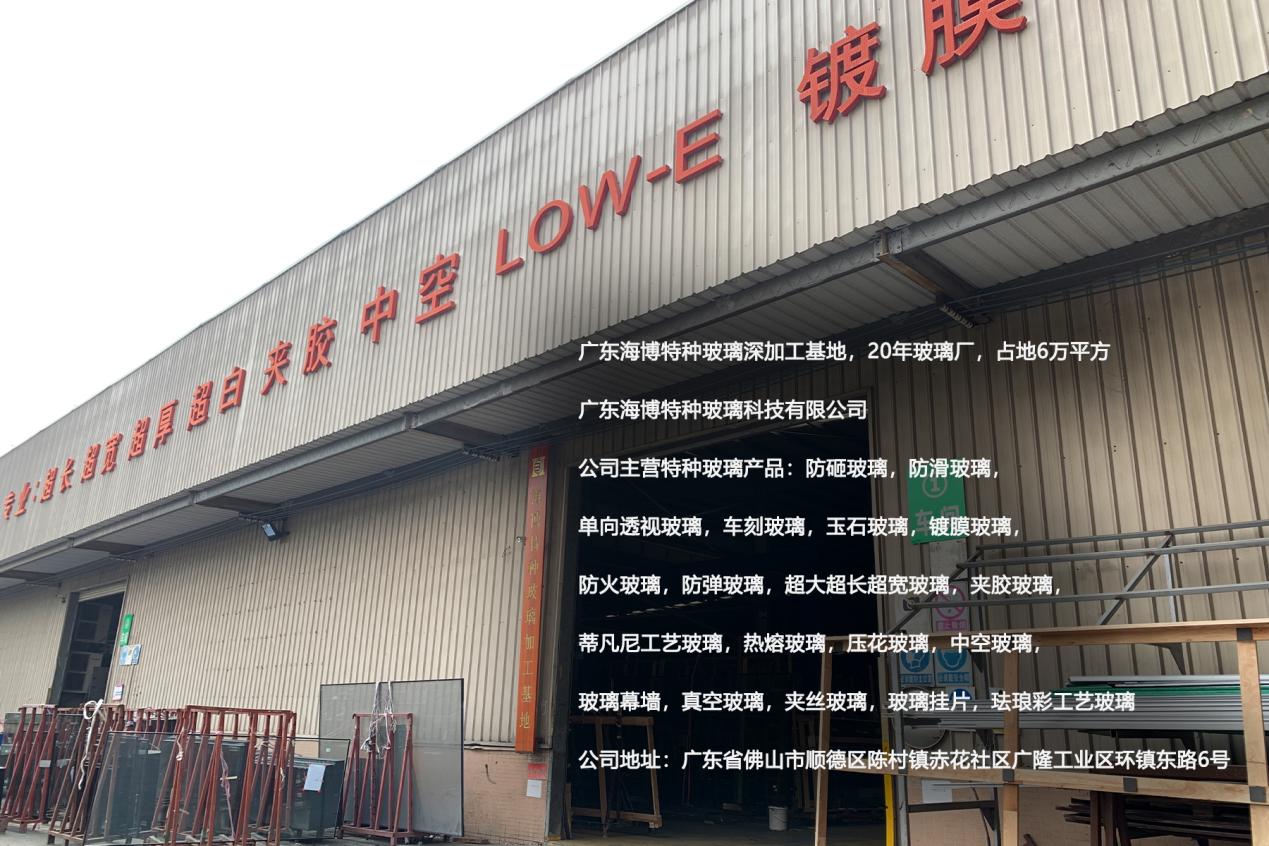
That's all for today's sharing. If you want to know the cost of Guangdong Haibo tempered glass, you can consult Haibo Special Glass to help you solve your doubts about the cost of Guangdong Haibo tempered glass!
Related News


Share to






Fill in your requirements
China Guangdong Haibo Special Glass Technology Co., Ltd. Unified Social Credit Code: 91440101MA5AT33G12 Contact Numbers: General Manager Cao, 13178822749; General Manager Wei, 13533794186.