

One-way mirror glass
Category:
Safety Glass
Product Description
One-way vision glass, also known as one-way glass, a one-way mirror, or reflective glass, is a type of glass with unique optical properties. The following are its main characteristics:
1. One-way visibility
High reflectance: One-way mirror glass exhibits a very high reflectance for visible light, enabling one side (the reflective surface) to act like a mirror under certain lighting conditions, while the other side (the viewing surface) allows clear visibility of objects on the reflective side.
Light‑dependent: The one‑way mirror effect relies on the difference in light intensity between the two sides. When the light intensity on the reflective side is significantly higher than that on the viewing side, the reflective surface appears as a mirror, blocking the view; meanwhile, the viewing side can clearly see the scene on the other side.
2. Privacy Protection
Covert Observation: One-way mirror glass is commonly used in settings that require discreet surveillance, such as public security bureaus, detention centers, prisons, and courts, enabling observers to monitor subjects without being detected.
Home Applications: In residential settings, one-way mirror glass can also be used to safeguard privacy—such as on bathroom or bedroom windows—to prevent prying eyes from the outside.
3. Safety and Explosion-Proof
High-strength materials: One-way vision glass is typically manufactured using high-strength materials, such as tempered glass, which offer superior impact resistance and pressure tolerance.
Explosion‑proof feature: Some one‑way vision glass also offers explosion‑proof protection, maintaining structural integrity under external impact and preventing shards from scattering and causing injury.
4. Energy-saving and environmentally friendly
UV Protection: One-way vision glass blocks the vast majority of ultraviolet rays, reducing UV‑induced damage to indoor furniture and décor while also lowering air‑conditioning energy consumption.
Lighting adjustment: By regulating the light intensity on both sides, you can ensure privacy while making efficient use of natural light and reducing lighting energy consumption.
5. Elegant and stylish
Diverse Design: One-way vision glass can be custom-designed to meet various requirements, including different colors, shapes, and sizes, thereby satisfying the aesthetic needs of diverse settings.
Harmonious integration with the environment: Its sleek and elegant design seamlessly blends into a variety of architectural and interior settings, enhancing the overall aesthetic appeal.
6. Installation and Maintenance
Installation requirements: The installation of one-way mirror glass must comply with specific standards, such as ensuring that the reflective surface faces the side with stronger illumination.
Easy maintenance: Routine upkeep is straightforward—simply wipe the surface regularly to remove dust and stains.
Main application scenarios
I. Public Security, Judicial, and Security Scenarios
Core Use : Covert observation, interrogation monitoring, and witness identification—ensuring safety while minimizing disruption to the scene.
Prison / Detention Center / Custodial Facility : Monitor inmate activities to ensure security in correctional facilities.
Bank / Jewelry Store Security Room Security personnel are conducting covert surveillance of the lobby to prevent theft.
II. Office and Commercial Spaces
Core Use : Private meetings, privacy partitions, and window displays—balancing natural light with privacy.
Executive Meeting Room / CEO’s Office : The exterior is a mirror finish, while the interior offers unobstructed views, ensuring meeting privacy.
Enterprise Monitoring Room / Command Center : Internal command, invisible to the outside world.
Storefront / Flagship Store During the day, the exterior is mirrored, allowing views of the outside from within; at night, it remains transparent.

III. Research and Education Sectors
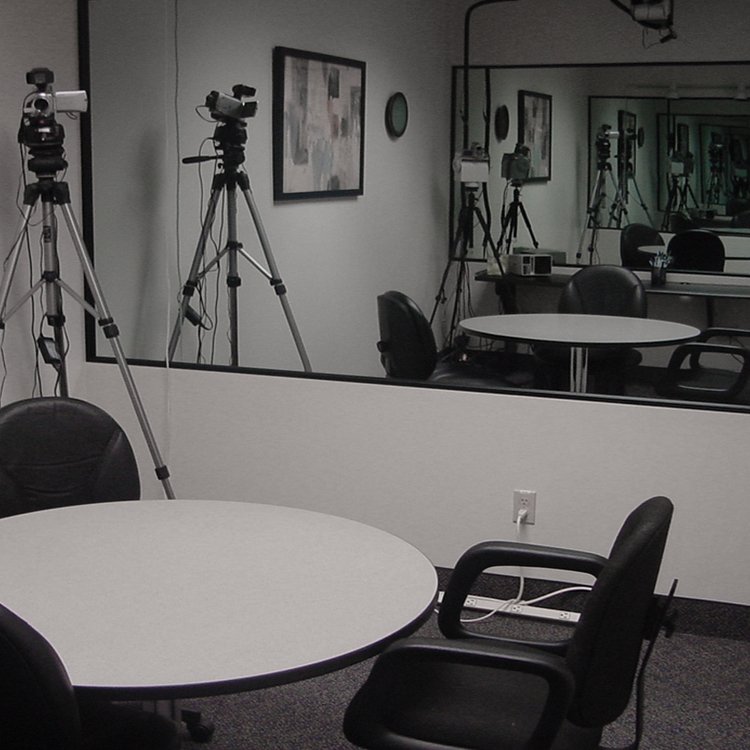
Core Use : Naturalistic observation, behavioral research, and classroom observation—aiming to minimize observer bias or interference with the subjects.
Psychology Laboratory / Behavioral Observation Room Observe the subject’s natural responses.
School Counseling Center : Protects visitors’ privacy and facilitates supervisory observation.
Kindergarten / Classroom Observation Window : One-way observation by parents or teachers, without disrupting the child’s class.
IV. Healthcare and Special Institutions
Core Use : Patient monitoring, privacy protection, and non-invasive treatment.
Hospital Ward / ICU Observation Window Healthcare personnel observe critically ill patients without disrupting their rest.
Psychiatric Hospital / Special Care Unit : Security monitoring to prevent patients from being disturbed by external factors.

V. Audiovisual and Media Sector
Core Use : Covert filming, soundproof observation, and director’s monitoring.
Studio/Live Room Observation Window : The director monitors in the control room without interfering with the recording.
Recording Studio / Audiovisual Studio : Soundproof observation to ensure a clean recording environment.
VI. Architecture and Artistic Design
Core Use : Facade privacy, interior decoration, and art installations.
High-end Residential / Villa Curtain Wall : Protects your privacy during the day and offers a view of the outside at night.
Interior Art Partition / Mirrored Wall : Strong modern aesthetic, with a dynamic interplay of solid and void spaces.
VII. Transportation and Special Equipment
Core Use : Driver’s view, equipment-mounted mirrors, privacy windows.
Subway / Train Cab : The driver observes the platform, while platform staff cannot see into the cab.
Special Vehicle/Equipment Mirrors : Observe the exterior from within to prevent prying eyes.





Fill in your requirements
China Guangdong Haibo Special Glass Technology Co., Ltd. Unified Social Credit Code: 91440101MA5AT33G12 Contact Numbers: General Manager Cao, 13178822749; General Manager Wei, 13533794186.